Why do private equity firms need managed IT services?

Why do private equity firms need managed IT services?
 Naka Team
Private equity firms operate in a fast-moving, high-pressure environment where speed, security, and precision matter at every stage. From evaluating new deals to managing multiple portfolio companies and preparing for exits, technology plays a critical role in keeping everything running smoothly. Yet, many private equity firms still struggle with complex IT systems, limited in-house resources, and growing cyber risks.
This is where managed IT services become essential. Instead of treating IT as a background function, private equity firms are now using it as a strategic advantage. Managed IT services help firms stay agile, secure sensitive data, support rapid growth, and maintain control across their entire portfolio. In today’s competitive market, having a reliable managed IT partner is no longer optional. It is a key part of building value and protecting investments.
Understanding the IT Landscape of Private Equity Firms
Private equity firms work in a fast-moving and high-pressure environment. Their main focus is buying, growing, and exiting businesses at the right time. Because of this, their IT needs are very different from regular companies. Technology has to support speed, accuracy, and control across multiple businesses at once.
Most private equity firms have lean internal teams. A small group of professionals manages large amounts of data, investor communication, deal execution, and reporting. At the same time, they oversee several portfolio companies, each with its own IT systems, tools, and risks. This creates a complex IT landscape that is hard to manage without the right support.
Key characteristics of the IT landscape in private equity include:
- Multiple portfolio companies with different IT setups
- Frequent changes due to acquisitions, mergers, and exits
- High data sensitivity, including financial and investor data
- Limited in-house IT staff at the fund level
- Need for fast access to reliable and accurate information
Another challenge is that portfolio companies are often at different stages of growth. Some may be startups with basic systems, while others are mature businesses with complex infrastructure. Managing all of this in a consistent and secure way is difficult without a strong IT framework.
This is why private equity firms need IT systems that are flexible, secure, and easy to scale. Technology must support deal speed, protect data, and provide clear visibility across the entire portfolio. Without the right IT approach, even the best investment strategy can face unnecessary risks and delays.
Why Traditional In-House IT Falls Short for Private Equity Firms
Private equity firms move fast. Deals happen quickly, portfolio companies change often, and growth plans can shift overnight. In this kind of environment, traditional in-house IT teams often struggle to keep up. What works for a single company does not always work for a firm managing multiple businesses at the same time.
One of the biggest problems with in-house IT is limited scale. Most PE firms keep small internal IT teams to control costs. These teams are usually fine for daily tasks, but they get stretched during acquisitions, mergers, or exits. When multiple portfolio companies need support at the same time, in-house teams simply do not have the bandwidth.
Another challenge is high cost with limited flexibility. Hiring and retaining senior IT talent is expensive. On top of that, you still need specialists for security, cloud, compliance, and infrastructure. Building all of this in-house increases overhead, without guaranteeing the speed and expertise private equity firms need.
Traditional in-house IT is also mostly reactive. Problems are fixed after they happen. This approach can lead to downtime, delays in operations, and frustration across portfolio companies. For PE firms, even small delays can impact performance, timelines, and returns.
In-house IT teams also struggle with visibility across portfolio companies. Each company may use different systems, tools, and security standards. This creates fragmented data, inconsistent reporting, and higher risk.
In short, traditional in-house IT often falls short because it:
- does not scale quickly during deals
- increases fixed costs
- reacts instead of preventing issues
- lacks portfolio-wide visibility and control
For private equity firms focused on speed, value creation, and risk management, these gaps can slow growth and reduce efficiency.
What Are Managed IT Services For Private Equity Firms?
Managed IT services for private equity firms are outsourced technology services that handle the day-to-day IT needs of the firm and its portfolio companies. Instead of managing multiple IT vendors or relying on small in-house teams, private equity firms work with a single expert partner who takes full responsibility for their IT systems.
These services are designed to support the fast-moving nature of private equity. From deal execution to portfolio growth and exits, managed IT services ensure that technology never becomes a roadblock.
For private equity firms, managed IT services typically include:
- IT infrastructure management to keep systems stable and running at all times
- Cybersecurity and data protection to safeguard sensitive financial and investor data
- Cloud services and system optimization for flexibility and scalability
- 24/7 monitoring and helpdesk support to reduce downtime across teams
- IT support during acquisitions and integrations, including Day-1 readiness
- Standardization across portfolio companies for better control and visibility
In simple terms, managed IT services allow private equity firms to focus on investing and value creation, while experienced IT professionals handle security, performance, and growth behind the scenes.
How Managed IT Services Support Private Equity Operations
Private equity firms move fast. Deals happen quickly, portfolio companies grow or change direction, and timelines are always tight. In this environment, technology needs to work smoothly in the background without slowing anything down. This is where managed IT services play a critical role in supporting private equity operations.
Managed IT services give private equity firms a reliable technology backbone. Instead of worrying about daily IT issues, internal teams can focus on investments, growth strategies, and value creation.
Faster Deal Execution
During acquisitions, time is extremely important. Managed IT teams help private equity firms prepare systems quickly so new portfolio companies are ready from day one.
They support operations by:
- setting up secure access for teams
- preparing email, devices, and networks
- identifying IT risks during due diligence
- ensuring smooth transition after deal closure
This reduces delays and keeps deals on track.
Smooth Post-Merger Integration
After an acquisition, portfolio companies often run on different systems. Managed IT services help bring everything together in a structured way.
This includes:
- standardizing tools and platforms
- aligning security policies
- integrating data and systems
- reducing confusion for employees
A smooth integration helps portfolio companies return to normal operations faster.
Reliable Day-to-Day Operations
Downtime can directly impact performance and revenue. Managed IT services monitor systems around the clock to catch problems early.
This leads to:
- fewer system failures
- faster issue resolution
- stable performance across portfolio companies
- improved employee productivity
- Scalable Support as Portfolios Grow
As private equity firms add or exit portfolio companies, IT needs change quickly. Managed IT services scale up or down without disruption, making them a flexible and cost-effective solution for long-term operations.
Overall, managed IT services allow private equity firms to operate with speed, stability, and confidence while keeping technology aligned with business goals.
Cybersecurity and Risk Management for Private Equity Firms
Private equity firms handle highly sensitive data. This includes financial records, investor information, deal documents, and data from multiple portfolio companies. Because of this, they are attractive targets for cyber attacks. A single security incident can lead to financial loss, legal trouble, and serious damage to reputation.
One of the biggest challenges for private equity firms is managing risk across different portfolio companies. Each company may use different systems, tools, and security practices. This creates gaps that attackers can easily exploit. Without a strong and consistent security setup, risks multiply quickly.
Managed IT services help private equity firms reduce these risks by putting strong cybersecurity controls in place across the entire portfolio. This includes:
- continuous monitoring to detect threats early
- endpoint security for laptops, servers, and cloud systems
- secure access controls for employees and partners
- regular security updates and patch management
Another critical area is compliance. Private equity firms often need to meet strict regulatory and data protection standards. Managed IT teams help ensure systems stay compliant by maintaining proper security policies, backups, and audit-ready documentation.
Most importantly, managed IT services shift cybersecurity from a reactive approach to a proactive one. Instead of responding after damage is done, risks are identified and handled early. This protects investments, builds trust with investors, and allows private equity firms to focus on growth with confidence.
Why NAKA Tech Is the Right Managed IT Partner for Private Equity
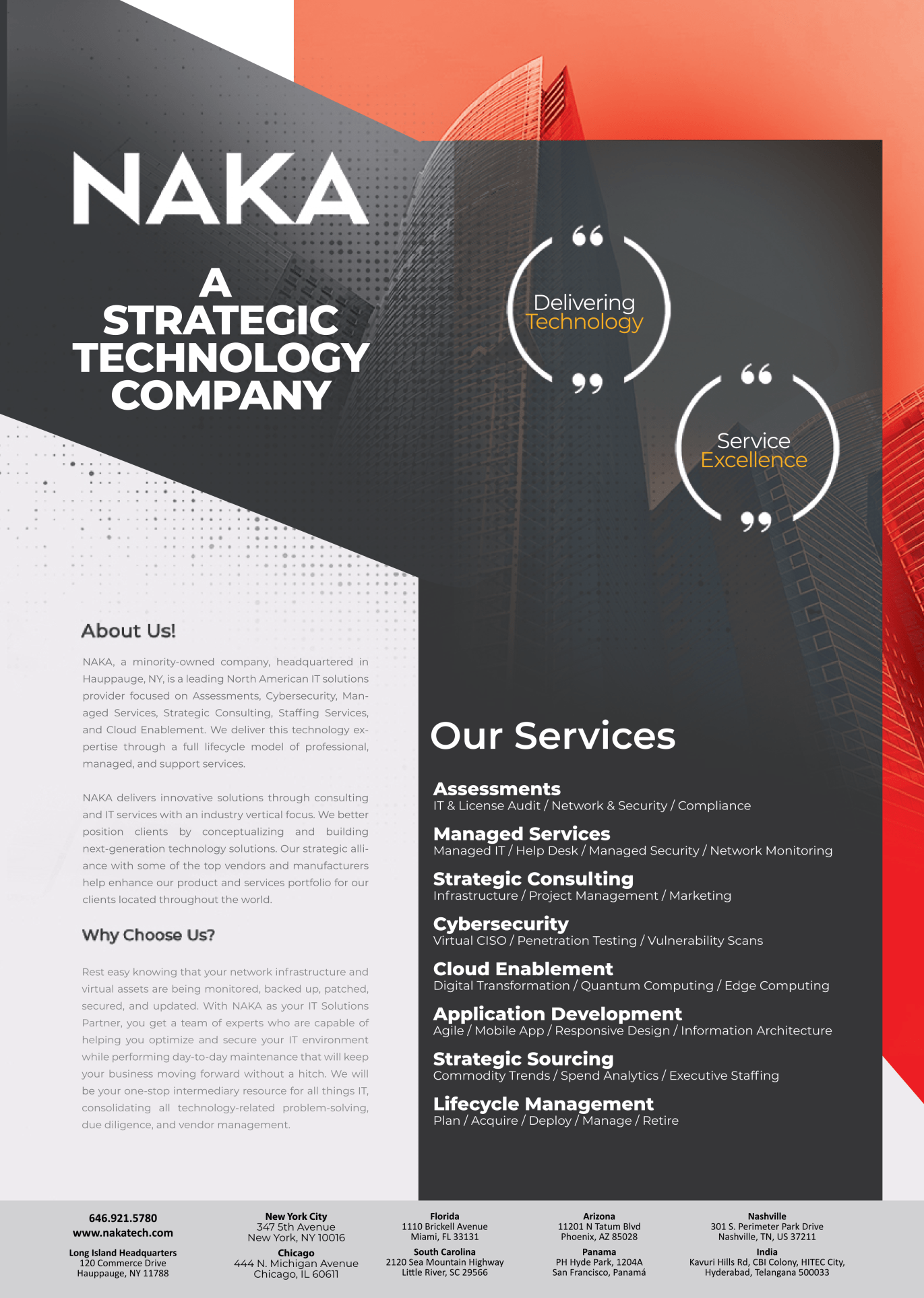
Private equity firms operate in a fast-moving, high-stakes environment where speed, security, and reliability matter at every stage. NAKA Tech understands these demands and delivers managed IT services designed specifically to support private equity operations and their portfolio companies.
NAKA Tech works as a strategic IT partner, not just a support vendor. From deal evaluation to post-acquisition integration, our team ensures technology never becomes a bottleneck. We help private equity firms move faster, stay secure, and maintain full control across complex portfolios.
Here’s what sets NAKA Tech apart:
- Private equity focused approach: We understand deal cycles, portfolio growth, and exit planning, and align IT strategy with investment goals.
- Strong cybersecurity and compliance: Advanced security monitoring, risk management, and compliance support protect sensitive financial and investor data.
- Scalable support across portfolio companies: Whether onboarding a new acquisition or supporting rapid growth, our services scale quickly without disruption.
- Proactive monitoring and 24/7 support: We prevent issues before they impact operations, ensuring consistent uptime and productivity.
Clear reporting and predictable costs: Transparent pricing, clear SLAs, and centralized visibility make IT spend easy to manage and forecast.
With NAKA Tech, private equity firms gain a trusted technology partner that protects value, supports growth, and simplifies IT across the entire investment lifecycle.
Final Thoughts
For private equity firms, technology is no longer just a support function. It plays a direct role in protecting investments, improving performance, and enabling faster growth across portfolio companies. As deal activity increases and IT environments become more complex, relying on a reactive or fragmented IT setup can create unnecessary risk.
Partnering with a managed IT services provider like NAKA Tech gives private equity firms the confidence to move quickly while staying secure and in control. With the right IT partner in place, firms can focus on value creation, smooth integrations, and successful exits, knowing their technology foundation is strong, stable, and built for scale.
Frequently Asked Questions
How does managed IT help during acquisitions and mergers?
Managed IT services support IT due diligence, Day-1 readiness, system integration, and smooth onboarding of new users and infrastructure after an acquisition.
Can one managed IT provider support multiple portfolio companies?
Yes. A strong managed IT partner like NAKA Tech can manage IT across all portfolio companies, offering standardized systems, centralized security, and consistent support.
Is managed IT secure enough for financial and investor data?
Yes. Managed IT providers use advanced cybersecurity tools, continuous monitoring, and compliance frameworks to protect sensitive data and reduce risk.
Does managed IT reduce overall IT costs for PE firms?
Yes. Managed IT replaces unpredictable IT spending with fixed monthly costs, reduces downtime, and eliminates the need for large in-house teams.
How quickly can managed IT services be scaled?
Managed IT services are designed to scale quickly. New users, offices, or acquisitions can be onboarded within days, not months.
What should private equity firms look for in a managed IT partner?
Firms should look for experience in private equity, strong cybersecurity, M&A support capability, transparent pricing, and proactive monitoring.
How does NAKA Tech support long-term value creation?
NAKA Tech aligns IT strategy with business goals, improves operational stability, enhances security, and supports growth across the entire investment lifecycle.