What managed IT services include network cabling and infrastructure?

What managed IT services include network cabling and infrastructure?
 Naka Team
For any modern business, IT systems are only as strong as the infrastructure behind them. While software, cloud platforms, and cybersecurity often get most of the attention, the physical network that connects everything is just as important. Poor cabling, outdated hardware, or weak network design can slow down operations, cause frequent downtime, and create security risks.
Many businesses assume that managed IT services only cover helpdesk support or system monitoring. In reality, a completely managed IT service also includes network cabling and infrastructure management. From planning and installing structured cabling to maintaining switches, racks, and connectivity, these services ensure your entire IT environment runs smoothly, securely, and is ready to scale.
Understanding Network Cabling and IT Infrastructure
To understand what managed IT services really cover, it’s important to first understand network cabling and IT infrastructure. These two elements form the physical foundation of every IT system in an office, data center, or enterprise environment.
What Is Network Cabling?
Network cabling is the system of physical cables that connects computers, servers, switches, routers, phones, and other devices. It allows data to move smoothly from one point to another. Without proper cabling, even the best software or cloud tools will perform poorly.
Common types of network cabling include:
- Ethernet cables used in offices for daily operations
- Fiber optic cables for high-speed and long-distance data transfer
- Cabling that supports Wi-Fi access points, printers, and VoIP phones
- Good cabling is not just about speed. It also affects reliability, security, and future expansion.
What Is IT Infrastructure?
IT infrastructure includes all the physical and technical components that support your business IT environment. This goes beyond cables and includes:
- Network devices like switches, routers, and firewalls
- Server racks and cabinets
- Power systems such as UPS and backup units
- Data centers, server rooms, and wiring closets
All these elements work together to keep your systems running without interruptions.
Role of Network Cabling in Managed IT Services
Network cabling is the foundation of any IT environment. No matter how advanced your software or cloud systems are, everything depends on how well your network is connected. In managed IT services, network cabling is not treated as a one-time setup. It is managed, monitored, and optimized as a critical part of daily operations.
A managed IT provider ensures that the cabling layout is planned correctly from the start. This includes understanding business needs, data flow, bandwidth usage, and future growth. Proper planning helps avoid cluttered cables, signal loss, and performance issues later.
Once installed, cabling is integrated with switches, routers, firewalls, and servers in a clean and organized way. Managed IT teams also label and document all connections, making troubleshooting faster and reducing downtime when changes or repairs are needed.
Ongoing management is equally important. Managed IT services include regular checks to detect loose connections, damaged cables, or overloaded ports. This proactive approach keeps the network stable, secure, and ready to support new users, devices, or office expansions without disruption.
In simple terms, strong network cabling allows managed IT services to deliver reliable performance, better security, and long-term scalability for the business.
Types of Network Cabling Covered Under Managed IT Services
Network cabling is the foundation of a stable and high-performing IT environment. Managed IT services do not rely on a one-size-fits-all approach. Instead, they include different types of cabling based on business size, data needs, and future growth. Below are the main types of network cabling usually covered under managed IT services.
Ethernet Cabling (Copper Cabling)
Ethernet cabling is the most commonly used type in offices and commercial spaces. It connects computers, printers, servers, and network devices within a local area network.
Managed IT services typically cover:
- Cat5e for basic office needs
- Cat6 and Cat6a for higher speed and better performance
- Proper cable routing, labeling, and testing
This type of cabling is reliable, cost-effective, and suitable for most day-to-day business operations.
Fiber Optic Cabling
Fiber optic cabling is used when businesses need very high speed, long-distance connectivity, or strong performance with minimal data loss.
It is commonly used for:
- Connecting different floors or buildings
- Data centers and server rooms
- High-bandwidth applications
Managed IT providers handle fiber planning, installation, splicing, and ongoing maintenance to ensure smooth and secure data flow.
Wireless Network Cabling (Wi-Fi Infrastructure Support)
While Wi-Fi is wireless, it still depends on physical cabling. Access points, controllers, and switches all require proper wired connections.
Managed IT services include:
- Cabling for Wi-Fi access points
- Placement planning for full coverage
- Support for office-wide and enterprise Wi-Fi setups
This ensures strong signal strength, fewer dead zones, and stable wireless performance.
Data Center and Server Room Cabling
Server rooms need highly organized and well-managed cabling to avoid downtime and confusion.
Managed IT services cover:
- Rack-to-rack cabling
- Patch panels and structured layouts
- Power and data cable separation
Clean and organized cabling improves performance, safety, and makes troubleshooting much easier.
IT Infrastructure Services Included in Managed IT
Managed IT services go far beyond basic troubleshooting or software support. A strong managed IT partner takes full responsibility for building, maintaining, and improving your entire IT foundation. This includes every physical and core system that keeps your business connected, secure, and running without interruptions. Below is a detailed breakdown of the key IT infrastructure services included in managed IT.
Network Devices Management
Managed IT services cover the setup, monitoring, and maintenance of all critical network devices that keep your business connected.
This includes:
- Switches to manage internal network traffic
- Routers to handle internet and site-to-site connectivity
- Firewalls to protect the network from threats
Managed IT teams ensure these devices are:
- Properly configured
- Regularly updated with firmware patches
- Monitored for performance issues
- Quickly repaired or replaced if failures occur
This prevents slow speeds, network drops, and security gaps.
Structured Cabling and Rack Infrastructure
Physical organization is a major part of IT reliability. Managed IT services include full responsibility for structured cabling and rack setups.
This covers:
- Clean and labeled Ethernet and fiber cabling
- Patch panels and cable management trays
- Server racks and wall-mounted racks
- Organized layout for easy troubleshooting
Good cabling reduces downtime, improves airflow, and makes future upgrades faster and cheaper.
Server Infrastructure Management
Managed IT providers handle both on-premise and hybrid server environments.
Services include:
- Server installation and configuration
- Operating system setup and updates
- Performance monitoring
- Disk space and memory management
- Hardware health checks
If a server slows down or fails, the managed IT team acts before it affects business operations.
Power, UPS, and Backup Infrastructure
Power stability is critical for IT systems. Managed IT services include managing power-related infrastructure to avoid data loss and hardware damage.
This includes:
- UPS systems to protect against power cuts
- Battery health monitoring
- Power load balancing
- Backup power planning for critical systems
These services ensure systems stay online during outages and shut down safely if needed. Network Monitoring and Performance Management. Managed IT teams actively monitor the entire infrastructure, not just when problems happen.
Monitoring includes:
- Network speed and bandwidth usage
- Packet loss and latency
- Device uptime
- Early warning alerts
This proactive approach helps fix issues before users even notice them.
Backup and Disaster Recovery Infrastructure
Data protection is a core part of managed IT infrastructure services.
These services include:
- On-site and cloud backup systems
- Automated backup scheduling
- Regular backup testing
- Disaster recovery planning
In case of system failure, ransomware, or accidental deletion, data can be restored quickly with minimal downtime.
Endpoint and Office IT Infrastructure
Managed IT also supports the physical IT setup across offices and workspaces.
This includes:
- Workstation connectivity
- Printer and scanner network setup
- Conference room AV and connectivity
- VoIP and IP phone infrastructure
Everything is configured to work smoothly together across the network.
Wi-Fi and Wireless Infrastructure
Reliable wireless access is now essential. Managed IT services include designing and managing secure Wi-Fi environments.
This covers:
- Access point placement and cabling
- Wi-Fi controller setup
- Secure guest networks
- Performance tuning for high user loads
This ensures stable wireless access across offices, warehouses, and campuses.
Infrastructure Security Support
Managed IT services also protect the physical and network layers of IT infrastructure.
This includes:
- Secure server rooms and rack access
- Network segmentation
- Firewall integration
- Secure cabling for cameras and access systems
Security is built into the infrastructure, not added later.
Scalability and Infrastructure Planning
Managed IT providers plan infrastructure with future growth in mind.
They support:
- Adding new users or departments
- Office expansion or relocation
- Multi-site connectivity
- Hybrid and cloud integration
This prevents the need for costly redesigns as the business grows.
Documentation and Compliance Support
A professional managed IT service maintains clear infrastructure documentation.
This includes:
- Network diagrams
- IP address records
- Hardware inventory
- Cabling maps
This helps with audits, troubleshooting, and long-term planning.
Benefits of Including Network Cabling in Managed IT Services
Including network cabling as part of managed IT services gives businesses a stronger, more reliable IT foundation. Instead of treating cabling as a one-time setup, it becomes a managed and monitored part of your overall IT system. This approach reduces problems and improves performance across the organization.
- Better Network Performance: Well-planned and properly installed cabling ensures stable connections, faster data flow, and fewer network drops. This means smoother access to applications, cloud tools, and internal systems.
- Reduced Downtime: Poor or damaged cables are a common cause of network failures. With managed IT services, cabling is regularly checked and maintained, helping prevent unexpected outages.
- Single Point of Responsibility: When cabling is included, one IT partner manages everything. This avoids confusion between vendors and speeds up issue resolution.
- Easier Scalability: As your business grows, adding new users, devices, or office spaces becomes simple because the cabling is already planned for expansion.
- Improved Security and Organization: Clean, labeled, and well-managed cabling reduces risks, supports secure network design, and makes audits and troubleshooting much easier.
Overall, including network cabling in managed IT services creates a stable, future-ready IT environment that supports growth instead of holding it back.
How NAKA Tech Delivers End-to-End Network Infrastructure Management
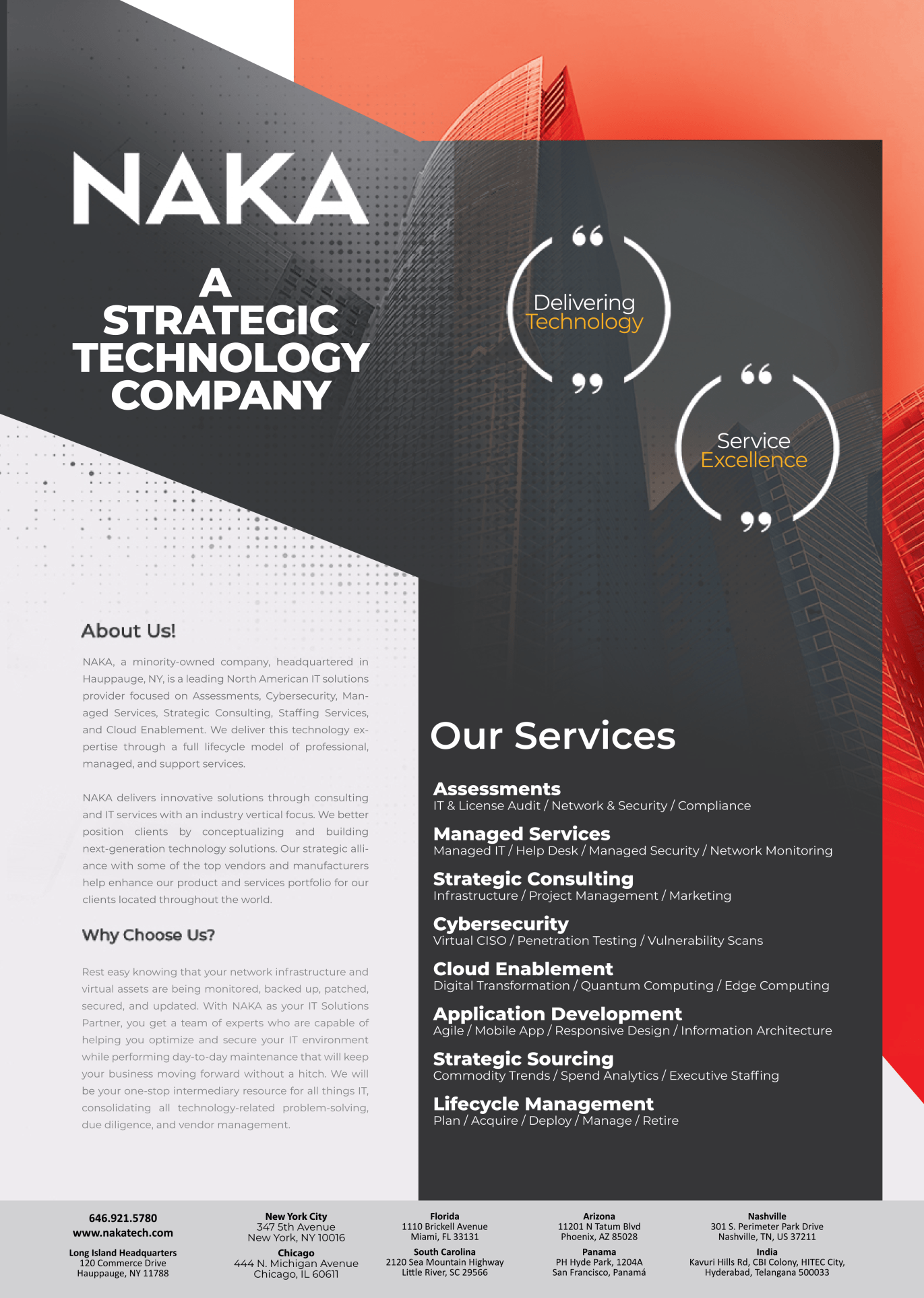
NAKA Tech takes a complete, hands-on approach to managing network cabling and IT infrastructure. Instead of fixing issues only when something breaks, the focus is on building a strong foundation and keeping it reliable over time. This helps businesses avoid downtime, improve performance, and plan for future growth with confidence.
The process starts with a detailed assessment of your existing setup. NAKA Tech reviews current cabling, network devices, layouts, and performance gaps to understand what is working and what needs improvement. Based on this, a clear and practical infrastructure plan is created.
NAKA Tech delivers end-to-end support through:
- structured cabling design and installation
- clean rack setup with proper labeling and documentation
- setup and management of switches, routers, and firewalls
- ongoing monitoring to detect issues early
- regular maintenance and upgrades as business needs grow
By handling everything under one managed IT service, NAKA Tech ensures your network infrastructure stays organized, secure, and ready to support daily operations and long-term expansion.
Who Needs Managed Network Cabling and Infrastructure Services?
Managed network cabling and infrastructure services are not just for large enterprises. Any business that depends on stable, secure, and fast connectivity can benefit from professional infrastructure management. As companies grow and technology becomes more complex, managing networks in-house often becomes difficult and risky.
These services are especially useful for:
- Enterprises and corporate offices with complex networks and high data usage
- Growing businesses and startups that need scalable infrastructure from day one
- Multi-location organizations that require consistent network performance across sites
- Data-driven companies that rely on speed, uptime, and secure connectivity
- Healthcare, finance, and regulated industries where compliance and reliability are critical
- Businesses planning office expansion or relocation and need structured cabling done right
For any organization where downtime, slow networks, or security gaps are not an option, managed network cabling and infrastructure services provide long-term stability and peace of mind.
Final Thoughts
Network cabling and infrastructure may not always be visible, but they play a critical role in how smoothly a business operates every day. A well-planned and properly managed network supports faster performance, better security, and fewer disruptions. When this foundation is weak, even the best software and cloud tools fail to deliver results.
Managed IT services that include network cabling and infrastructure help businesses stay reliable, scalable, and future-ready. By trusting experts like NAKA Tech, organizations can focus on growth while knowing their IT backbone is designed, maintained, and optimized the right way.
Frequently Asked Questions
Does managed IT cover both new installations and existing networks?
Yes. Managed IT providers handle new cabling installations as well as audits, upgrades, and optimization of existing network infrastructure.
How often should network infrastructure be reviewed or maintained?
Infrastructure should be reviewed regularly, usually every 6 to 12 months, or whenever there is business growth, office expansion, or performance issues.
Can managed IT services support office moves or expansions?
Yes. Managed IT services include planning and setting up network cabling and infrastructure during office relocations, expansions, or new site launches.
Is managed network infrastructure scalable as the business grows?
Absolutely. Managed IT services are designed to scale with your business, allowing easy addition of users, devices, and new technologies without major disruptions.
How does managed infrastructure improve network security?
Proper cabling, organized racks, secure network devices, and regular monitoring reduce risks, prevent unauthorized access, and support stronger security controls.